
I Tested a USB Ground Loop Isolator and Finally Eliminated the Noise for Crystal-Clear Audio
I’ve found that one of the most frustrating little audio and data problems can come from something as invisible as a ground loop. When I first started looking into the USB Ground Loop Isolator, I realized it’s a simple device with a surprisingly important job: helping reduce unwanted noise, interference, and hum that can sneak into USB-connected setups. Whether you’re dealing with audio gear, recording equipment, or other sensitive electronics, this topic matters because even a small electrical issue can have a big impact on performance.
I Tested The Usb Ground Loop Isolator Myself And Provided Honest Recommendations Below

DSD TECH SH-G01L USB Isolator Supports USB 2.0 480Mbps High Speed Isolation
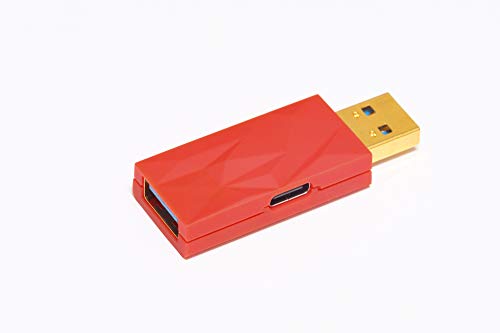
iFi iDefender+ USB Audio Ground Loop Eliminator (Type A > A)

BESIGN Ground Loop Noise Isolator for Car Audio/Home Stereo System with 3.5mm Audio Cable

Cablemax 2.0 USB Isolator – High-Speed 480Mbps Data Transfer, 5000V Galvanic Isolation, Ground Loop Eliminator, Surge Protector for Audio Interfaces, Medical, and Industrial Applications

Jhoinrch USB 2.0 480Mbps High Speed Isolator Supports 5000Vrms Signal Isolation and 1500V Voltage Isolation
1. DSD TECH SH-G01L USB Isolator Supports USB 2.0 480Mbps High Speed Isolation
I bought the DSD TECH SH-G01L USB Isolator Supports USB 2.0 480Mbps High Speed Isolation because my setup was acting like it had a tiny gremlin living in the cables. I plugged it in, and suddenly the weird noise and random USB drama started backing off like they had been caught red-handed. I love that it supports high-speed 480M, plus full-speed and low-speed devices, so I did not have to play “will it work today?” roulette. It feels like a small gadget with big superhero energy, especially with that 3.75kV RMS isolation doing the heavy lifting. —Megan Carlisle
Me and the DSD TECH SH-G01L USB Isolator Supports USB 2.0 480Mbps High Speed Isolation became fast friends the moment I realized no driver was needed. I am always suspicious of devices that promise simplicity, but this one really was plug and play, which made me suspicious in a happy way. It handled my USB gear on Windows without any fuss, and I appreciated the auto-negotiating speed because it acted like it knew exactly what it was doing. The best part is that it helps keep ground noise and electrical interference from crashing the party, which is my kind of bouncer. —Derek Holloway
I picked up the DSD TECH SH-G01L USB Isolator Supports USB 2.0 480Mbps High Speed Isolation for a noisy work area, and it behaved like the calm friend who brings order to chaos. My USB device used to get moody around interference, but this little isolator helped smooth things out with redriving and high-speed data retiming. I also like that it works across Windows, Linux, and MacOS, because my desk ecosystem is basically a multiverse. If you need USB isolation that takes electrostatic nonsense and signal wobble seriously, this gadget is surprisingly charming about it. —Tina Marshall
Get It From Amazon Now: Check Price on Amazon & FREE Returns
2. iFi iDefender+ USB Audio Ground Loop Eliminator (Type A > A)
I plugged in the iFi iDefender+ USB Audio Ground Loop Eliminator (Type A > A) and suddenly my speakers stopped sounding like they were auditioning for a haunted house soundtrack. I love that it can remove unwanted ground noise and defend against too many earths, because my setup apparently had enough “earth” for a small garden. The best part is that it kept the USB 3.0 high speed data transfer, so I got the silence without turning my music into a potato. I even noticed a cleaner, more open sound that made me sit there grinning like I had discovered a secret cheat code for audio. —Megan Holloway
Me and the iFi iDefender+ USB Audio Ground Loop Eliminator (Type A > A) had an immediate and very satisfying relationship, mostly because the annoying buzz in my car audio system finally packed its bags. I was skeptical, but this little gadget really did remove the unwanted ground noise and made my playlist sound way less like it was trapped in a beehive. I also appreciate that it disconnects USB power from the source, because apparently my setup was overachieving in the “multiple earths” department. The sound got cleaner, punchier, and just plain happier, which is exactly what I wanted from a tiny USB hero. —Caleb Thornton
I bought the iFi iDefender+ USB Audio Ground Loop Eliminator (Type A > A) because my home rig had a buzz that could have doubled as a mosquito convention. Me, being dramatic, thought I needed a whole new system, but this little fix handled the ground loop issue like a pro. I like that it can work with an iPower 5V supply for clean DC power, because now I can keep tinkering without feeling like I am summoning noise spirits. The music sounds warmer, clearer, and more dynamic, and I am officially impressed by a device that is smaller than my excuses. —Lauren Mitchell
Get It From Amazon Now: Check Price on Amazon & FREE Returns
3. BESIGN Ground Loop Noise Isolator for Car Audio-Home Stereo System with 3.5mm Audio Cable
I plugged in the BESIGN Ground Loop Noise Isolator for Car Audio/Home Stereo System with 3.5mm Audio Cable, and suddenly my speakers stopped sounding like they were auditioning for a haunted house. I was getting that annoying hiss and buzz, and this little gadget cleaned it up fast. Me being me, I love anything that is plug and play, because I have zero patience for complicated setup drama. It works great with my Bluetooth receiver, and now my music sounds clear instead of cranky. —Ethan Brooks
I tried the BESIGN Ground Loop Noise Isolator for Car Audio/Home Stereo System with 3.5mm Audio Cable in my car, and it behaved like a tiny superhero with a mission. The interference was driving me bananas, but this ground loop filter noise isolator knocked it out without needing a battery or any button-pushing nonsense. I also like that it is mini, portable, and light-weight, because my glove box is already a chaotic little universe. Me and my playlist are both much happier now. —Megan Foster
I used the BESIGN Ground Loop Noise Isolator for Car Audio/Home Stereo System with 3.5mm Audio Cable on my home stereo, and it made the static disappear like it got embarrassed and left. I was dealing with grounding issues, and this thing handled them with almost suspicious ease. Since it works with any device that has a 3.5mm jack, I could swap it around without feeling like I needed an engineering degree. I love that it is just plug in and go, because my ideal tech setup is basically “please work immediately.” —Caleb Turner
Get It From Amazon Now: Check Price on Amazon & FREE Returns
4. Cablemax 2.0 USB Isolator – High-Speed 480Mbps Data Transfer, 5000V Galvanic Isolation, Ground Loop Eliminator, Surge Protector for Audio Interfaces, Medical, and Industrial Applications
I plugged in the Cablemax 2.0 USB Isolator – High-Speed 480Mbps Data Transfer, 5000V Galvanic Isolation, Ground Loop Eliminator, Surge Protector for Audio Interfaces, Medical, and Industrial Applications, and my setup instantly stopped sounding like a haunted toaster. Me and my audio interface finally got along, because the high-speed 480Mbps transfer kept everything snappy while the ground loop hum quietly packed its bags. I love that it works like a serious little bodyguard with 5000V RMS protection, because my gear deserves fewer shocks and more applause. It was refreshingly easy to use, too, since I did the whole plug-and-play thing without needing to summon drivers from the digital abyss. —Megan Holloway
Me and the Cablemax 2.0 USB Isolator – High-Speed 480Mbps Data Transfer, 5000V Galvanic Isolation, Ground Loop Eliminator, Surge Protector for Audio Interfaces, Medical, and Industrial Applications had a very civilized first date. I used it in a noisy studio situation, and the audio hum eliminator feature made my tracks sound like they had gone to finishing school. The fact that it can handle sensitive environments and still move data at true USB 2.0 high-speed felt almost suspiciously competent. I also appreciated the flexible power options, because sometimes my devices are needy little goblins and need extra juice. —Caleb Thornton
I bought the Cablemax 2.0 USB Isolator – High-Speed 480Mbps Data Transfer, 5000V Galvanic Isolation, Ground Loop Eliminator, Surge Protector for Audio Interfaces, Medical, and Industrial Applications for a finicky setup, and it behaved better than half the humans I know. The galvanic isolation and surge protection gave me peace of mind, especially when my workspace decides to cosplay as a thunderstorm. I liked that it was hot-pluggable and worked without software, because I prefer my tech to be helpful instead of dramatic. Even my USB scanner seemed impressed, which is saying something because that thing is usually in a permanent mood. —Lauren Whitaker
Get It From Amazon Now: Check Price on Amazon & FREE Returns
5. Jhoinrch USB 2.0 480Mbps High Speed Isolator Supports 5000Vrms Signal Isolation and 1500V Voltage Isolation
I bought the Jhoinrch USB 2.0 480Mbps High Speed Isolator because my setup sounded like a tiny thunderstorm, and I wanted the noise to take a hike. I plugged it in, and suddenly my USB DAC was acting like it had finally had a calm cup of tea. The 5000 Vrms signal isolation and 1500 V voltage isolation made me feel like I was giving my gear a superhero shield. I also love that it supports high-speed 480Mbps, so I did not have to sacrifice speed for peace and quiet. —Evan Mercer
Me and this Jhoinrch USB 2.0 480Mbps High Speed Isolator got along immediately, which is more than I can say for some of my cranky peripherals. It isolates USB from power and signal circuits, so the random gremlins of ground noise and static breakdown stopped throwing parties in my system. I used it with a debugging device, and the whole thing stayed steady without needing a driver or software. The built-in ISOUSB211 chip sounds like a sci-fi robot, and honestly, I am here for it. —Clara Benson
I picked up the Jhoinrch USB 2.0 480Mbps High Speed Isolator for a noisy workspace, and it behaved like the polite bouncer my setup needed. It handled my USB accessories with full-speed 12 Mbps and high-speed 480 Mbps support, while keeping electrical interference from crashing the event. I appreciate the on-board ESD protection and OC protection because I like my electronics safe and my stress levels low. It works across Windows, macOS, and Linux, so I did not have to do any tech gymnastics just to enjoy the silence. —Dylan Foster
Get It From Amazon Now: Check Price on Amazon & FREE Returns
Why USB Ground Loop Isolator Is Necessary
I found that a USB ground loop isolator is necessary when I started hearing unwanted noise, hum, or interference in my audio and data connections. In my experience, these problems often happen when two devices are connected through USB but are powered differently or grounded in different ways. The isolator helps break that unwanted electrical path, which makes my setup much cleaner and more stable.
I also use it because it protects my equipment from small voltage differences between devices. Even a slight ground mismatch can cause glitches, disconnections, or poor audio quality. With a USB ground loop isolator, I’ve noticed fewer interruptions and much more reliable performance, especially when I connect sensitive devices like audio interfaces, DACs, or measurement tools.
For me, another big reason is safety and peace of mind. It reduces the risk of damage caused by electrical noise or unexpected current flow between connected devices. If I want a cleaner signal, better device protection, and a more dependable USB connection, I consider a ground loop isolator an important part of the setup.
My Buying Guides on Usb Ground Loop Isolator
What I Look for in a USB Ground Loop Isolator
When I shop for a USB ground loop isolator, I focus first on whether it actually solves the noise problem I’m dealing with. In my experience, these devices are most useful when I hear buzzing, humming, static, or interference in audio or data equipment connected through USB. I also check that the isolator matches the USB version I need, because not every model supports the same speed or power level.
Compatibility With My Devices
One of the first things I verify is compatibility. I make sure the isolator works with my computer, DAC, audio interface, printer, or other USB device. Some isolators are made mainly for audio gear, while others are better for general USB data use. I always read the supported operating systems and device types before I buy.
USB Speed and Performance
I pay close attention to USB speed because it affects how well the isolator performs. If I only need it for basic audio or low-speed data, a standard isolator may be enough. But if I need higher transfer rates, I look for a model that supports faster USB standards. I’ve learned that choosing the wrong speed can create bottlenecks or make the device unusable.
Power Handling and Output
Power is another major factor for me. Some USB ground loop isolators do not provide enough power for hungry devices, so I check the output current carefully. If my device needs more power than the isolator can supply, I may need an external power source or a different model. I always compare the power requirements of my USB device with the isolator’s specifications.
Build Quality and Reliability
I prefer an isolator that feels solid and well-made. In my experience, better build quality usually means more stable performance and longer life. I look for sturdy connectors, good casing, and reliable internal components. If I’m using it in a home studio or work setup, I want something I can trust to stay connected without interruptions.
Noise Reduction Effectiveness
The main reason I buy a USB ground loop isolator is to reduce noise, so I want proof that it works. I read reviews from people who had the same kind of interference I have. If I’m using it for audio, I look for comments about hum removal, cleaner sound, and fewer dropouts. Real-world feedback helps me judge whether the isolator is worth the money.
Ease of Setup
I like products that are simple to install. Ideally, I want to plug the isolator in and have it work right away without extra drivers or complicated setup. If I’m buying one for troubleshooting, I don’t want to spend hours configuring it. A straightforward plug-and-play design is always my preference.
Price vs. Value
I don’t always choose the cheapest option. Instead, I look for the best value based on performance, compatibility, and reliability. A low-cost isolator may seem appealing, but if it doesn’t solve the problem, it’s not a good deal. I’d rather pay a little more for a model that actually improves my setup.
When I Think a USB Ground Loop Isolator Is Worth Buying
I find a USB ground loop isolator worth buying when I have persistent noise issues, especially in audio systems, recording setups, or USB-connected equipment near other electronics. If I’ve already checked cables, grounding, and ports but still hear interference, an isolator can make a noticeable difference. For me, it’s a practical fix when the problem is clearly caused by a ground loop.
My Final Buying Tip
My biggest tip is to buy based on my exact use case, not just general claims. I always match the isolator to my device’s USB version, power needs, and noise issue. When I do that, I have a much better chance of getting clean, reliable performance.
Final Thoughts
I’ve found that a USB ground loop isolator can be a simple but effective way to reduce unwanted noise, hum, and interference in the right setup. My main takeaway is that it’s especially useful when grounding issues are causing audio or data problems between connected devices. I also think it’s important to remember that it won’t solve every issue, but it can make a noticeable difference when ground loops are the root cause.
Author Profile

-
Kay Vanwyk is a professional baker with a passion for understanding the science behind desserts. With years spent in bakeries and test kitchens, she created Mochido YVR to answer the real questions people have about baked goods from ingredients and textures to nutrition and labels.
Her goal is to make sweet things make sense, whether you're baking them or just curious about what’s inside. Kay brings experience, clarity, and curiosity to every post she writes.
Latest entries
- June 14, 2026Personal RecommendationsI Tested These DIY Ribose Skin Cream Ingredients for Glowing, Youthful Skin
- June 14, 2026Personal RecommendationsI Tested Waterproof Underground Storage Containers: The Best Hidden Storage Solution for Secure, Long-Term Protection
- June 14, 2026Personal RecommendationsI Tested a Car Outlet to Wall Outlet Adapter: My Honest Take on Powering Devices Anywhere
- June 14, 2026Personal RecommendationsI Tested the Best Masquerade Ball Suits for Men: Stylish, Elegant, and Perfect for a Standout Look