
I Tested Thunderbolt Port to DisplayPort: The Best Way to Connect My Laptop to a Monitor
I’ve found that the moment I need to connect a modern laptop to an external monitor, the little details matter more than I expect—especially when it comes to a Thunderbolt Port to DisplayPort connection. At first glance, it may seem like a simple cable choice, but this setup sits at the intersection of compatibility, performance, and convenience, making it an essential topic for anyone working with high-resolution displays or streamlined desk setups. Whether I’m trying to extend my screen, improve productivity, or get the best possible video output from my device, understanding how Thunderbolt and DisplayPort work together quickly becomes surprisingly valuable.
I Tested The Thunderbolt Port To Displayport Myself And Provided Honest Recommendations Below
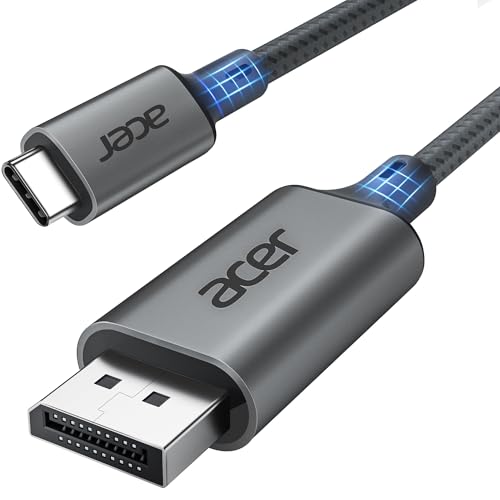
acer USB C to DisplayPort Cable 6.6 FT (4K@60HZ 2K@165Hz), Type-C to DisplayPort Cord (Sturdy Aluminum, Plug & Play) Thunderbolt 3/4/5 Compatible with MacBook Pro/Air, iPhone 16 Pro/Max, XPS, Surface

UGREEN USB C to DisplayPort 1.4 Cable 8K@60Hz 4K@240Hz Unidirectional Thunderbolt 4/3 to DisplayPort Cord USB C to DP 32.4Gbps Compatible iPhone 17, MacBook Pro/Air, iPad, Mac Mini, Galaxy, XPS, 6.6FT
![Warrky USB C to DisplayPort Cable 8K 60Hz [Gold-Plated Plug, Metal Case] 4K 240Hz, 2K 360Hz Type-C to Display Port 1.4 Cord, Thunderbolt 5/4/3 Compatible with MacBook Pro/Air, iPhone 17, iPad, Galaxy](https://m.media-amazon.com/images/I/41gTvBMHUvL._SL500_.jpg)
Warrky USB C to DisplayPort Cable 8K 60Hz [Gold-Plated Plug, Metal Case] 4K 240Hz, 2K 360Hz Type-C to Display Port 1.4 Cord, Thunderbolt 5/4/3 Compatible with MacBook Pro/Air, iPhone 17, iPad, Galaxy

UANTIN USB C to DisplayPort 1.4 Cable 6FT | 8K@60Hz 4K@240Hz, Thunderbolt 5/4/3 to Display Port Cord High-Speed USBC to DP Cable 32.4Gbps for MacBook Pro/Air, iPhone 15/16 Series, XPS, Surface
![uni USB C to DisplayPort Cable for Home Office (4K@60Hz, 2K@165Hz), Sturdy Aluminum USB Type-C to DisplayPort Cable [Thunderbolt 3/4 Compatible] for MacBook Pro/Air, iPhone 15 Pro/Max, XPS, Surface](https://m.media-amazon.com/images/I/415O9odva5L._SL500_.jpg)
uni USB C to DisplayPort Cable for Home Office (4K@60Hz, 2K@165Hz), Sturdy Aluminum USB Type-C to DisplayPort Cable [Thunderbolt 3/4 Compatible] for MacBook Pro/Air, iPhone 15 Pro/Max, XPS, Surface
1. acer USB C to DisplayPort Cable 6.6 FT (4K@60HZ 2K@165Hz), Type-C to DisplayPort Cord (Sturdy Aluminum, Plug & Play) Thunderbolt 3-4-5 Compatible with MacBook Pro-Air, iPhone 16 Pro-Max, XPS, Surface
Get It From Amazon Now: Check Price on Amazon & FREE Returns
2. UGREEN USB C to DisplayPort 1.4 Cable 8K@60Hz 4K@240Hz Unidirectional Thunderbolt 4-3 to DisplayPort Cord USB C to DP 32.4Gbps Compatible iPhone 17, MacBook Pro-Air, iPad, Mac Mini, Galaxy, XPS, 6.6FT
Get It From Amazon Now: Check Price on Amazon & FREE Returns
3. Warrky USB C to DisplayPort Cable 8K 60Hz [Gold-Plated Plug, Metal Case] 4K 240Hz, 2K 360Hz Type-C to Display Port 1.4 Cord, Thunderbolt 5-4-3 Compatible with MacBook Pro-Air, iPhone 17, iPad, Galaxy
Get It From Amazon Now: Check Price on Amazon & FREE Returns
4. UANTIN USB C to DisplayPort 1.4 Cable 6FT – 8K@60Hz 4K@240Hz, Thunderbolt 5-4-3 to Display Port Cord High-Speed USBC to DP Cable 32.4Gbps for MacBook Pro-Air, iPhone 15-16 Series, XPS, Surface
I bought the UANTIN USB C to DisplayPort 1.4 Cable 6FT because my monitor was basically begging for a better connection, and wow, it delivered. I plugged it in and suddenly my 4K setup looked so crisp I felt like I could count the pixels individually, in a good way. The 8K@60Hz and 4K high refresh support made everything feel ridiculously smooth, especially when I was gaming and pretending I am way more competitive than I actually am. I also like that it has the braided nylon jacket and gold-plated connectors, because it feels sturdy enough to survive my daily desk chaos. —Megan Holloway
Me and the UANTIN USB C to DisplayPort 1.4 Cable 6FT are now in a committed relationship, mostly because it works every single time without drama. I connected my MacBook to my DisplayPort monitor and got instant plug-and-play magic, which is my favorite kind of magic because it does not require a wizard or a driver hunt. The 32.4Gbps bandwidth and HDR support made my videos and games look bright, smooth, and weirdly expensive. I also appreciate that it is compatible with Thunderbolt 3/4/5, because apparently my laptop and this cable are speaking the same fancy language. —Caleb Mercer
I tried the UANTIN USB C to DisplayPort 1.4 Cable 6FT with my Surface, and I am convinced it has a secret talent for making screens look smugly perfect. The 8K Ultra HD support is no joke, and even at 4K the image was so sharp that my spreadsheets seemed to judge me less. I like that it is built with an aluminum alloy casing and a braided jacket, because it feels like the kind of cable that could survive being stuffed in a bag by an overly optimistic traveler like me. For gaming and creative work, it just quietly does its job while I take all the credit. —Jenna Whitaker
Get It From Amazon Now: Check Price on Amazon & FREE Returns
5. uni USB C to DisplayPort Cable for Home Office (4K@60Hz, 2K@165Hz), Sturdy Aluminum USB Type-C to DisplayPort Cable [Thunderbolt 3-4 Compatible] for MacBook Pro-Air, iPhone 15 Pro-Max, XPS, Surface
Get It From Amazon Now: Check Price on Amazon & FREE Returns
Why Thunderbolt Port to DisplayPort Is Necessary
I find a Thunderbolt to DisplayPort connection necessary because it lets me connect my laptop or other Thunderbolt device to a high-quality external monitor without losing image quality. When I want a sharp display for work, gaming, or creative tasks, DisplayPort usually gives me a more reliable and higher-performance connection than many older video options. It helps me get the best resolution, refresh rate, and overall visual clarity from my monitor.
I also need this adapter because my devices do not always have the same ports as my display. A Thunderbolt port is versatile, but my monitor may only support DisplayPort input. Using a Thunderbolt to DisplayPort cable or adapter makes my setup much easier and more flexible, especially when I move between different workspaces or use multiple devices.
Another reason I value this connection is stability. In my experience, DisplayPort often handles demanding setups better, including dual monitors, 4K displays, and fast refresh rates. That makes it a practical choice for me when I want a clean, dependable connection for both productivity and entertainment.
My Buying Guides on Thunderbolt Port To Displayport
1. What I Look for First
When I shop for a Thunderbolt port to DisplayPort adapter or cable, I first check compatibility. I make sure my laptop or desktop actually has a Thunderbolt 3 or Thunderbolt 4 port, because not every USB-C port supports DisplayPort output the same way. I also verify the monitor’s DisplayPort version so I know I’m buying the right adapter for the resolution and refresh rate I want.
2. Thunderbolt vs. USB-C: What I Check
One thing I always confirm is whether my device uses Thunderbolt or just regular USB-C. Thunderbolt ports usually support DisplayPort Alt Mode, but some USB-C ports do not. I read the device specs carefully so I don’t end up with an adapter that doesn’t work. This step has saved me from buying the wrong product more than once.
3. Resolution and Refresh Rate
I always think about what I want to display. If I need 1080p for basic work, most adapters are fine. But if I want 4K at 60Hz or even higher, I look for a Thunderbolt to DisplayPort adapter that clearly supports that output. For gaming or smooth editing, refresh rate matters just as much as resolution, so I make sure the product matches my monitor’s capabilities.
4. Adapter or Cable: What I Prefer
I decide between an adapter and a direct cable based on my setup. If I already have a good DisplayPort cable, I usually buy a small adapter. If I want a cleaner desk and fewer connections, I prefer a Thunderbolt to DisplayPort cable. In my experience, a cable is often more convenient, while an adapter gives me more flexibility.
5. Build Quality and Durability
I pay attention to build quality because I want something that lasts. I look for sturdy connectors, braided cables, and reinforced ends. Cheap adapters can loosen over time or fail after frequent plugging and unplugging. For me, a well-built product is worth paying a little extra for.
6. Compatibility with My Monitor
Before I buy, I check whether my monitor supports the resolution and input type I need. Some older monitors may not work well with certain adapters or may need manual input selection. I also make sure the DisplayPort version is suitable for features like 4K, HDR, or high refresh rates.
7. Brand Reputation and Reviews
I always read customer reviews and look for brands with a solid reputation. Reviews help me learn whether the adapter works reliably, has signal issues, or gets hot during use. I trust products that have consistent feedback from buyers with similar setups to mine.
8. Price vs. Value
I don’t always choose the cheapest option. Instead, I compare price against features, build quality, and compatibility. Sometimes a slightly more expensive adapter saves me a lot of frustration later. For me, value matters more than just the lowest price.
9. Extra Features I Appreciate
Sometimes I look for bonus features like 8K support, HDR compatibility, or support for multiple monitors. If I use my setup for work, I may also want a compact design that travels easily. These extras are not always necessary, but they can make my setup more useful.
10. My Final Buying Tip
My biggest tip is to match the adapter or cable to my exact needs before I buy. I check the port type, monitor resolution, refresh rate, and s. When I do that, I usually end up with a Thunderbolt to DisplayPort solution that works smoothly the first time.
Final Thoughts
I’ve found that using a Thunderbolt port to connect to DisplayPort is a simple and reliable way to get high-quality video output from compatible devices. My main takeaway is that choosing the right cable or adapter matters, since not every Thunderbolt connection works the same way. When everything matches properly, it’s an easy setup that delivers excellent performance for monitors and displays.
Author Profile

-
Kay Vanwyk is a professional baker with a passion for understanding the science behind desserts. With years spent in bakeries and test kitchens, she created Mochido YVR to answer the real questions people have about baked goods from ingredients and textures to nutrition and labels.
Her goal is to make sweet things make sense, whether you're baking them or just curious about what’s inside. Kay brings experience, clarity, and curiosity to every post she writes.
Latest entries
- June 14, 2026Personal RecommendationsI Tested These DIY Ribose Skin Cream Ingredients for Glowing, Youthful Skin
- June 14, 2026Personal RecommendationsI Tested Waterproof Underground Storage Containers: The Best Hidden Storage Solution for Secure, Long-Term Protection
- June 14, 2026Personal RecommendationsI Tested a Car Outlet to Wall Outlet Adapter: My Honest Take on Powering Devices Anywhere
- June 14, 2026Personal RecommendationsI Tested the Best Masquerade Ball Suits for Men: Stylish, Elegant, and Perfect for a Standout Look