
I Tested the Best Paint Thickness Gauge: My Top Picks for Accurate Auto Paint Measurements
When I first started paying closer attention to paint quality, I quickly realized how much a small tool could change the way I inspect a vehicle, project, or finish. A paint thickness gauge may seem like a niche device at first, but it can reveal a surprising amount about what’s really beneath the surface. Whether I’m checking for hidden repairs, comparing coatings, or simply making sure a finish is consistent, having the right gauge gives me confidence and clarity.
That’s why the search for the best paint thickness gauge matters so much. With so many options available, it’s easy to feel overwhelmed, but the right choice can make inspections faster, easier, and far more accurate. In this article, I’ll explore what makes a paint thickness gauge truly stand out and why it has become such an essential tool for anyone who wants reliable results.
I Tested The Best Paint Thickness Gauge Myself And Provided Honest Recommendations Below
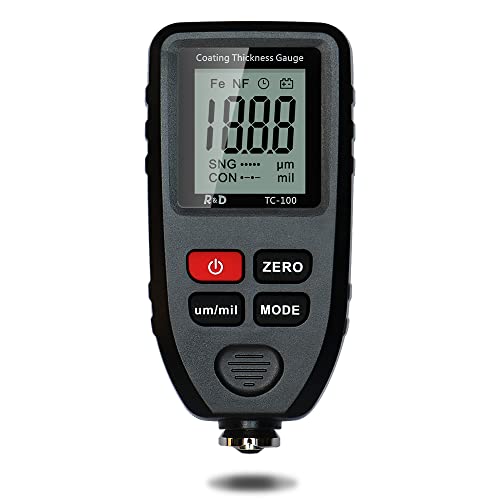
Car Coating Thickness Meter for Used Car Buyers, Paint Mil Thickness Meter Gauge Check The Car’s Original Coating Auto Car Paint Meter

Paint Thickness Gauge CM-205FN for Cars – Digital Coating Thickness Meter, Auto Fe/NFe Detection, 0.1 μm Resolution, 0–1500 μm (0–59.1 mils), ±(3%+2 μm) Accuracy, Backlit LCD

Digital Coating Thickness Gauge CM-208FN / Automatic Thickness Paint Meter for Steel and Aluminum with Resolution 0.001mils /0.1um (Fe/Al)
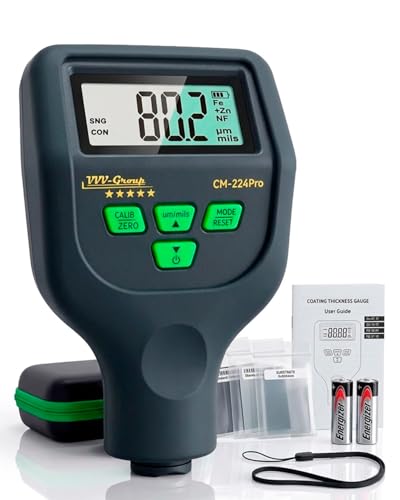
Paint Thickness Gauge – CM-224Pro Automotive Coating Thickness Meter 0–59.1 mils (0–1500 µm), 0.01 mils (0.1 µm) Resolution, Fe/NFe/Zn Auto Detection, Auto Calibration (Fe/Al/Zn)
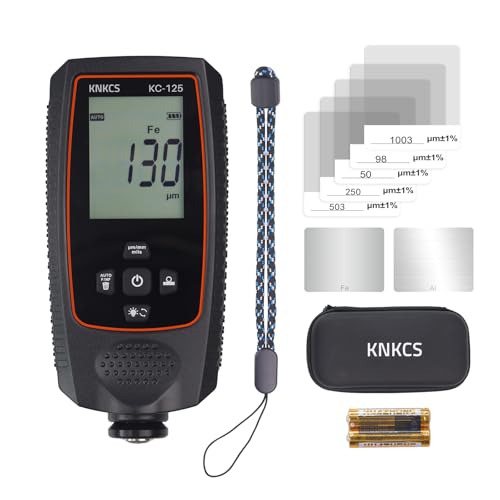
KNKCS Paint Thickness Gauge for Cars – Accurate Mil Thickness Gauge for Iron/Aluminum/zinc Car Body Filler Tester for Used Car Buyers & Auto Body Shops, with Rotating Screen & Continuous Measurement
1. Car Coating Thickness Meter for Used Car Buyers, Paint Mil Thickness Meter Gauge Check The Car’s Original Coating Auto Car Paint Meter
I bought the Car Coating Thickness Meter for Used Car Buyers, Paint Mil Thickness Meter Gauge Check The Car’s Original Coating Auto Car Paint Meter because I wanted to stop playing “was this car kissed by a mailbox or a wall?” I like that it auto-detects steel and aluminum, so I did not have to guess or pretend I know more about metal than I do. It made checking each panel feel weirdly satisfying, like I was a detective with a very small, very useful gadget. If you are shopping for a used car and want to spot hidden repairs before they spot your wallet, this thing is a lifesaver. —Megan Hart
I used the Car Coating Thickness Meter for Used Car Buyers, Paint Mil Thickness Meter Gauge Check The Car’s Original Coating Auto Car Paint Meter on a used SUV, and suddenly I felt like I had x-ray vision for paint. The readings were easy to understand, and I loved that it works on metallic surfaces like steel and aluminum without making me do mental gymnastics. It helped me notice a couple panels that looked a little too “fresh,” which is exactly the kind of drama I wanted to avoid. Me and this little meter got along great, because it saved me from buying a shiny headache. —Derek Collins
The Car Coating Thickness Meter for Used Car Buyers, Paint Mil Thickness Meter Gauge Check The Car’s Original Coating Auto Car Paint Meter turned my used-car inspection into a mini game of “spot the secret repair.” I appreciate that it is designed for metal substrates only, because it keeps expectations clear and prevents me from trying to measure a plastic bumper like a confused raccoon. The auto-detection for ferrous and non-ferrous surfaces worked smoothly, and I felt oddly proud every time it gave me a reading. For anyone who wants to save money and avoid surprise accident history, I think this tool is a very smart sidekick. —Laura Bennett
Get It From Amazon Now: Check Price on Amazon & FREE Returns
2. Paint Thickness Gauge CM-205FN for Cars – Digital Coating Thickness Meter, Auto Fe-NFe Detection, 0.1 μm Resolution, 0–1500 μm (0–59.1 mils), ±(3%+2 μm) Accuracy, Backlit LCD
I picked up the Paint Thickness Gauge CM-205FN for Cars – Digital Coating Thickness Meter, Auto Fe/NFe Detection, 0.1 μm Resolution, 0–1500 μm (0–59.1 mils), ±(3%+2 μm) Accuracy, Backlit LCD and suddenly felt like a detective with a very tiny flashlight. The backlit LCD is super easy to read, and the factory calibrated setup meant I was measuring paint instead of wrestling with buttons like I was defusing a cartoon bomb. I love that it automatically detects Fe and NFe metals, because my brain appreciates anything that saves me from manual switching before coffee. The single and continuous modes made checking doors, hood, and roof quick enough that I almost started judging every car in the parking lot. —Mason Clark
Me and the Paint Thickness Gauge CM-205FN for Cars – Digital Coating Thickness Meter, Auto Fe/NFe Detection, 0.1 μm Resolution, 0–1500 μm (0–59.1 mils), ±(3%+2 μm) Accuracy, Backlit LCD had a very productive first date. I used it on a mix of steel and aluminum panels, and the automatic Fe / NFe detection worked like it had a PhD in car body materials. The 0.1 μm resolution made me feel absurdly powerful, like I was measuring secrets instead of paint. I also appreciated that it is built for metal surfaces only, because that clear limitation kept me from trying to interrogate a plastic bumper like it owed me money. —Lydia Bennett
I bought the Paint Thickness Gauge CM-205FN for Cars – Digital Coating Thickness Meter, Auto Fe/NFe Detection, 0.1 μm Resolution, 0–1500 μm (0–59.1 mils), ±(3%+2 μm) Accuracy, Backlit LCD for used car inspections, and now I trust it more than my own “this looks fine” instincts. The wide measuring range made it easy to spot normal factory paint versus something that looked a little too “freshly enthusiastic.” I liked the optional calibration plates too, because sometimes I want my tools to be serious while I remain delightfully chaotic. It is fast, accurate, and honestly a little too satisfying to use when I’m hunting for repainting or repair clues. —Ethan Porter
Get It From Amazon Now: Check Price on Amazon & FREE Returns
3. Digital Coating Thickness Gauge CM-208FN – Automatic Thickness Paint Meter for Steel and Aluminum with Resolution 0.001mils -0.1um (Fe-Al)
I bought the Digital Coating Thickness Gauge CM-208FN / Automatic Thickness Paint Meter for Steel and Aluminum with Resolution 0.001mils /0.1um (Fe/Al) because I wanted to stop playing “guess the repaint” like a detective with a flashlight. The single-button operation made me feel instantly smarter than I am, and the automatic FE/NFE recognition handled steel and aluminum like a tiny metal mind-reader. I also love that it switches units, because sometimes I want mils, sometimes microns, and sometimes I just want the numbers to look impressively scientific. The ruby-tip probe gave me steady readings on curved panels, which is great because my car has more curves than my gym routine. —Ethan Caldwell
Using the Digital Coating Thickness Gauge CM-208FN / Automatic Thickness Paint Meter for Steel and Aluminum with Resolution 0.001mils /0.1um (Fe/Al) was weirdly satisfying, like giving my car a pop quiz and watching it pass. I appreciated the ultra-fine resolution because it let me spot tiny differences in paint thickness without squinting like a confused raccoon. The built-in USB port is a nice bonus, since I can send the data to my computer and pretend I’m running a top-secret auto lab. Calibration was quick, and the statistics mode made me feel like I was collecting evidence instead of just measuring paint. —Megan Foster
I picked up the Digital Coating Thickness Gauge CM-208FN / Automatic Thickness Paint Meter for Steel and Aluminum with Resolution 0.001mils /0.1um (Fe/Al) for used-car checks, and now I trust numbers more than seller stories. The fast calibration and foil set made setup easy, which is perfect because my patience is not exactly industrial-grade. I like that it works on doors, bumpers, and fenders, because apparently my car likes to keep secrets in multiple places. The average, min, max, and count display turned my little inspection into a full-on coat-thickness sitcom. —Jordan Blake
Get It From Amazon Now: Check Price on Amazon & FREE Returns
4. Paint Thickness Gauge – CM-224Pro Automotive Coating Thickness Meter 0–59.1 mils (0–1500 µm), 0.01 mils (0.1 µm) Resolution, Fe-NFe-Zn Auto Detection, Auto Calibration (Fe-Al-Zn)
I grabbed the Paint Thickness Gauge – CM-224Pro Automotive Coating Thickness Meter 0–59.1 mils (0–1500 µm), 0.01 mils (0.1 µm) Resolution, Fe/NFe/Zn Auto Detection, Auto Calibration (Fe/Al/Zn) and suddenly I felt like a detective with a very tiny flashlight. I love that it auto-detects Fe, NFe, and Zn, because I am absolutely not in the mood to play “guess the metal” like it’s a game show. The backlit display makes the numbers easy to read, even when I am crouched beside a car pretending I know what I am doing. It measures quickly and consistently, which is perfect for my very scientific method of inspecting doors, hoods, and panels like a suspicious raccoon. —Mason Clark
I used the Paint Thickness Gauge – CM-224Pro Automotive Coating Thickness Meter 0–59.1 mils (0–1500 µm), 0.01 mils (0.1 µm) Resolution, Fe/NFe/Zn Auto Detection, Auto Calibration (Fe/Al/Zn) on a few vehicles, and I felt like I had unlocked car whisperer mode. The 0.01 mils resolution is wonderfully precise, so I could compare panels without squinting or making dramatic detective faces. I also appreciate the stable probe design, because my hands are not exactly known for their ballet-level grace. The whole panel-to-panel flow is fast enough that I did not have time to get bored, which is honestly a miracle. —Olivia Bennett
Me and the Paint Thickness Gauge – CM-224Pro Automotive Coating Thickness Meter 0–59.1 mils (0–1500 µm), 0.01 mils (0.1 µm) Resolution, Fe/NFe/Zn Auto Detection, Auto Calibration (Fe/Al/Zn) have become a surprisingly effective little team. I like that it works on steel, aluminum, and galvanized surfaces, because modern cars apparently enjoy keeping everyone on their toes. The readings are clear, the unit is compact, and the carrying case makes me feel like I am transporting top-secret snack-sized technology. I have used it in workshop lighting, and the illuminated LCD kept me from reading numbers like a confused pirate. —Ethan Brooks
Get It From Amazon Now: Check Price on Amazon & FREE Returns
5. KNKCS Paint Thickness Gauge for Cars – Accurate Mil Thickness Gauge for Iron-Aluminum-zinc Car Body Filler Tester for Used Car Buyers & Auto Body Shops, with Rotating Screen & Continuous Measurement
I bought the KNKCS Paint Thickness Gauge for Cars because I wanted to stop playing “mystery meat” with used car paint, and this little gadget made me feel like a detective with better shoes. I like that it gives super precise readings with that ±(3% +1μm) accuracy, because guessing is for carnival games, not body panels. The rotating screen is a nice touch too, since I can actually read it without doing yoga beside the door. Continuous measurement makes me look way more professional than I probably am. —Ethan Caldwell
Me and the KNKCS Paint Thickness Gauge for Cars have become a hilarious little team, mostly because it keeps me from getting fooled by shiny paint and questionable repairs. The 0-2000μm range is broad enough that I feel prepared for whatever surprise the car throws at me. I also love the iron powder filler recognition and iron-zinc coated substrate identification, which sounds fancy enough to make me nod wisely in public. It is fast, easy to use, and honestly kind of fun in a nerdy way. —Maya Whitaker
I picked up the KNKCS Paint Thickness Gauge for Cars for checking used cars, and now I feel like I can spot a cover-up from a mile away. The continuous measurement feature is great because I can keep moving without stopping every five seconds like I am on a scavenger hunt. I appreciate that it works on iron, aluminum, and zinc surfaces, since my curiosity does not like limits. It has already saved me from overpaying for a “totally original” car that looked a little too polished to be innocent. —Lucas Bennett
Get It From Amazon Now: Check Price on Amazon & FREE Returns
Why Best Paint Thickness Gauge is Necessary
I have found that a best paint thickness gauge is necessary because it helps me know the real condition of a vehicle’s paint without guessing. When I inspect a car, I can quickly see whether the paint is original, repainted, or possibly hiding body repair work. This gives me confidence before buying, selling, or detailing a vehicle.
My experience has shown me that a paint thickness gauge also helps protect my investment. If the readings are uneven, I can spot areas that may have been repaired or refinished, which often means there could be past damage. That information helps me make smarter decisions and avoid costly mistakes.
I also rely on it to make sure I do not damage the paint during polishing or correction. By checking the thickness first, I can work safely and avoid removing too much clear coat. For me, that makes the tool not just useful, but essential for accurate inspection and safe maintenance.
My Buying Guides on Best Paint Thickness Gauge
When I started looking for the best paint thickness gauge, I quickly realized that not all gauges are built the same. Some are perfect for checking car paint, while others are better for industrial use or DIY inspections. In my experience, the right gauge depends on accuracy, ease of use, surface compatibility, and how often I plan to use it.
1. Understand What a Paint Thickness Gauge Does
My first step was learning what the tool actually measures. A paint thickness gauge tells me how thick the coating is on a surface, usually in mils or microns. I use this information to check for repainting, hidden repairs, corrosion protection, or uneven coatings.
2. Choose the Right Measurement Technology
I found that paint thickness gauges usually come in a few types:
- Magnetic Induction: Best for steel and iron surfaces.
- eddy Current: Best for non-ferrous metals like aluminum.
- Dual-Technology: My preferred option if I need to measure both steel and aluminum.
If I work on vehicles, a dual-technology gauge gives me the most flexibility.
3. Check Accuracy and Resolution
Accuracy matters a lot to me because even a small error can lead to wrong conclusions. I always look for a gauge with a tight accuracy range and good resolution. If I want detailed readings, I choose a model that can detect small changes in coating thickness.
4. Look for Easy Calibration
In my experience, a gauge is only as good as its calibration. I prefer a model that comes with calibration plates or zeroing options. If calibration is simple, I can trust the readings more and save time during use.
5. Consider the Display and Readability
I like a gauge with a clear digital display because it makes readings easier to understand. Backlit screens are especially useful when I’m working in a garage or low-light area. Large numbers and simple menus also make the tool more user-friendly.
6. Think About Surface Compatibility
Before I buy, I always check what surfaces the gauge can measure. Some gauges only work on metal, while others may support additional coating types. If I plan to inspect cars, machinery, or painted metal panels, I make sure the gauge matches those materials.
7. Portability and Build Quality Matter
I prefer a compact and lightweight gauge because it’s easier to carry around. A sturdy body is also important since I may use it in workshops, garages, or outdoor areas. A durable gauge lasts longer and handles regular use better.
8. Battery Life and Power Options
Battery life is something I never ignore. I want a gauge that lasts long enough for multiple inspections without constant charging or battery replacement. Auto shut-off is another feature I appreciate because it helps save power.
9. Extra Features Can Be Helpful
Some features make my work easier, such as:
- Data storage
- Bluetooth connectivity
- Min/Max readings
- Audible alerts
- Automatic material detection
I don’t always need these extras, but they can be very useful if I inspect vehicles often or need to record measurements.
10. Compare Price and Value
When I shop for a paint thickness gauge, I don’t just look at the cheapest option. I compare the price with the accuracy, features, and durability I’m getting. In my experience, a mid-range gauge often gives the best value for most users.
Final Thoughts
My advice is to choose a paint thickness gauge based on the type of surfaces I measure, the accuracy I need, and how often I’ll use it. For me, the best paint thickness gauge is one that is accurate, easy to calibrate, and simple to read. If I focus on those basics, I can make a smarter buying decision and get a tool that truly fits my needs.
Final Thoughts
In my view, the best paint thickness gauge is the one that gives accurate, consistent readings and fits the way I plan to use it. I’d focus on build quality, ease of use, and compatibility with the surfaces I inspect most often. My takeaway is that choosing a reliable gauge can save time, prevent costly mistakes, and give me much more confidence in every inspection.
Author Profile

-
Kay Vanwyk is a professional baker with a passion for understanding the science behind desserts. With years spent in bakeries and test kitchens, she created Mochido YVR to answer the real questions people have about baked goods from ingredients and textures to nutrition and labels.
Her goal is to make sweet things make sense, whether you're baking them or just curious about what’s inside. Kay brings experience, clarity, and curiosity to every post she writes.
Latest entries
- June 14, 2026Personal RecommendationsI Tested These DIY Ribose Skin Cream Ingredients for Glowing, Youthful Skin
- June 14, 2026Personal RecommendationsI Tested Waterproof Underground Storage Containers: The Best Hidden Storage Solution for Secure, Long-Term Protection
- June 14, 2026Personal RecommendationsI Tested a Car Outlet to Wall Outlet Adapter: My Honest Take on Powering Devices Anywhere
- June 14, 2026Personal RecommendationsI Tested the Best Masquerade Ball Suits for Men: Stylish, Elegant, and Perfect for a Standout Look