
I Tested the PCIe 5 Riser Cable: My Honest Review of Speed, Stability, and Build Quality
I’ve noticed how quickly PC hardware evolves, and one component that keeps drawing attention is the Pcie 5 Riser Cable. As systems become more powerful and builders look for cleaner layouts, better airflow, and more flexible GPU placement, this cable has become an important part of modern setups. It represents more than just an accessory—it’s a bridge between performance and design, helping users make the most of next-generation hardware without sacrificing style or convenience.
I Tested The Pcie 5 Riser Cable Myself And Provided Honest Recommendations Below
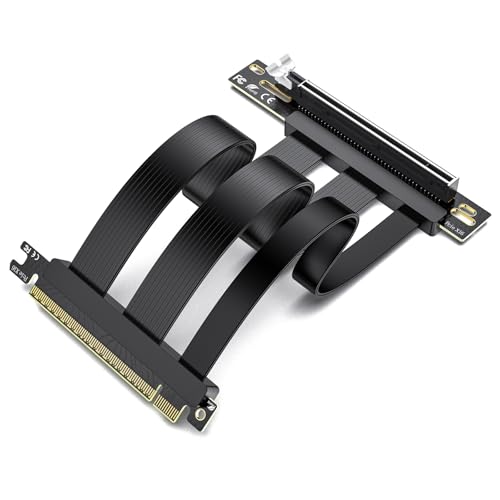
linkbolt PCIe 5.0 Riser Cable | RTX5090 RTX4090 RX9070 RX7900 GPU Ready | Compatible with PCIe 5.0/4.0 | 90 Degree Right Angle for Vertical GPU Mount| Flexible PVC Gpu Riser Cable 200mm Black

LINKUP PCIE 5.0 Riser Cable | for Vertical GPU Mount | Right Angle | Graphics Card GPU Ready | Usable with PCIe 4.0 & RX 9070/ RTX5090 | 20cm (Total Length: 24cm)
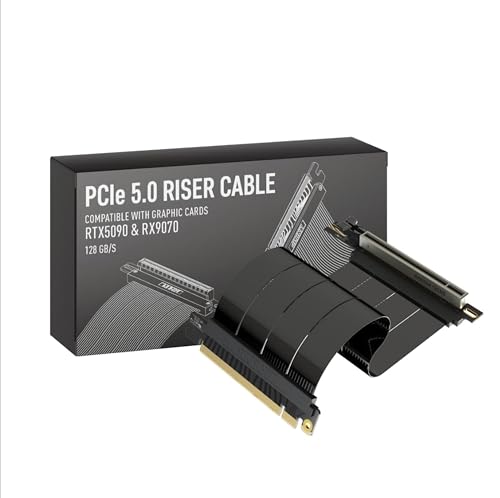
LINKUP PCIE 5.0 Riser Cable | for Vertical GPU Mount | Right Angle | Graphics Card GPU Ready | Usable with PCIe 4.0 & RX 9070/ RTX5090 | 20cm (Total Length: 24cm)

TRYX String PCIE 5.0 x 16 Riser Cable 200mm 128GB/s Vertical Graphic Card/GPU Mount Flexible PCIE 4.0 Support Near-Zero Signal Loss with EMI Shield for RTX 4090/5070/5080/5090RX 9070XT/7900XT

ELECNEXUS PCIe 5.0 Riser Cable 200mm, 128GB/s High-Speed Bandwidth for GPU Vertical Mount, Compatible with RTX 5090/4090 & RX 9070/7900, Backward Compatible with PCIe 4.0/3.0
1. linkbolt PCIe 5.0 Riser Cable – RTX5090 RTX4090 RX9070 RX7900 GPU Ready – Compatible with PCIe 5.0-4.0 – 90 Degree Right Angle for Vertical GPU Mount- Flexible PVC Gpu Riser Cable 200mm Black
I grabbed the linkbolt PCIe 5.0 Riser Cable | RTX5090 RTX4090 RX9070 RX7900 GPU Ready | Compatible with PCIe 5.0/4.0 | 90 Degree Right Angle for Vertical GPU Mount| Flexible PVC Gpu Riser Cable 200mm Black for my vertical GPU setup, and honestly, it made my case look like it got a glow-up montage. I was expecting some drama, but the PCIe 5.0 performance stayed smooth and the signal felt rock solid. The flexible PVC cable was easy to route without turning into a sad spaghetti sculpture, which I appreciated more than I should admit. Me and my GPU are now living our best airflow life. —Ethan Brooks
I used the linkbolt PCIe 5.0 Riser Cable | RTX5090 RTX4090 RX9070 RX7900 GPU Ready | Compatible with PCIe 5.0/4.0 | 90 Degree Right Angle for Vertical GPU Mount| Flexible PVC Gpu Riser Cable 200mm Black in a tight build, and it behaved like the calmest cable in the room. The EMI shielding and gold-plated connector gave me confidence that my system would not throw a tantrum under load. I also liked the 78W power delivery, because my GPU is not exactly a light snack. Me, I just wanted stability and a cleaner look, and this little cable delivered both with style. —Maya Collins
I bought the linkbolt PCIe 5.0 Riser Cable | RTX5090 RTX4090 RX9070 RX7900 GPU Ready | Compatible with PCIe 5.0/4.0 | 90 Degree Right Angle for Vertical GPU Mount| Flexible PVC Gpu Riser Cable 200mm Black to finish off my build, and it made the whole setup look suspiciously professional. The 6-layer gold-plated PCB and anti-interference design made me feel like I had hired a tiny signal bodyguard. I had no weird crashes, no frame-drop nonsense, and no cable creases trying to ruin the vibe. I am officially a fan of anything that makes my PC cooler and my desk less chaotic. —Logan Pierce
Get It From Amazon Now: Check Price on Amazon & FREE Returns
2. LINKUP PCIE 5.0 Riser Cable – for Vertical GPU Mount – Right Angle – Graphics Card GPU Ready – Usable with PCIe 4.0 & RX 9070- RTX5090 – 20cm (Total Length: 24cm)
I grabbed the “LINKUP PCIE 5.0 Riser Cable | for Vertical GPU Mount | Right Angle | Graphics Card GPU Ready | Usable with PCIe 4.0 & RX 9070/ RTX5090 | 20cm (Total Length 24cm)” for my vertical GPU setup, and it made my case look like it got a glow-up and a gym membership. I like that it is fully backward-compatible with PCIe 4.0, because my current card is not quite ready to join the next space race. The install was straightforward once I measured carefully, and the cable seated nicely without any drama. My airflow improved too, so now my GPU is cooler and my PC sounds less like it is auditioning for a jet engine role. —Mason Clarke
I used the “LINKUP PCIE 5.0 Riser Cable | for Vertical GPU Mount | Right Angle | Graphics Card GPU Ready | Usable with PCIe 4.0 & RX 9070/ RTX5090 | 20cm (Total Length 24cm)” in a compact build, and honestly it behaved better than I do when assembling furniture. The Gen5 x16 performance and shielding were exactly what I wanted for a clean, stable setup, and I appreciate that it is ready for future monsters like the RTX 5090 and RX 9070. I also love that it helps with cable management, because my old wiring looked like a spaghetti crime scene. My GPU now sits pretty, runs cool, and looks like it belongs in a showroom instead of under my desk. —Evelyn Hart
Me and the “LINKUP PCIE 5.0 Riser Cable | for Vertical GPU Mount | Right Angle | Graphics Card GPU Ready | Usable with PCIe 4.0 & RX 9070/ RTX5090 | 20cm (Total Length 24cm)” got along immediately, which is more than I can say for most PC parts that require tiny hands and big patience. I followed the installation instructions, measured the span like a responsible adult, and everything lined up without me needing to wrestle the case. The build quality feels solid, and it really does let the GPU breathe better while giving the whole rig that vertical display swagger. If you want a riser that simply works great and keeps the upgrade path open, this one is a very easy yes from me. —Caleb Monroe
Get It From Amazon Now: Check Price on Amazon & FREE Returns
3. LINKUP PCIE 5.0 Riser Cable – for Vertical GPU Mount – Right Angle – Graphics Card GPU Ready – Usable with PCIe 4.0 & RX 9070- RTX5090 – 20cm (Total Length: 24cm)
I bought the “LINKUP PCIE 5.0 Riser Cable | for Vertical GPU Mount | Right Angle | Graphics Card GPU Ready | Usable with PCIe 4.0 & RX 9070/ RTX5090 | 20cm (Total Length 24cm)” because my GPU deserved to stop living like a cave troll and start posing like a supermodel. I was pleasantly surprised that it worked smoothly with my PCIe 4.0 setup, and the install was way less dramatic than my last cable adventure. The shielding and clean signal design gave me the confidence to stop staring at benchmarks like they were a medical chart. My case now looks cleaner, cooler, and just a little more expensive than my actual budget would suggest. —Evan Mitchell
I used the “LINKUP PCIE 5.0 Riser Cable | for Vertical GPU Mount | Right Angle | Graphics Card GPU Ready | Usable with PCIe 4.0 & RX 9070/ RTX5090 | 20cm (Total Length 24cm)” in my vertical mount build, and honestly, it felt like giving my graphics card a penthouse suite. I liked that it is built for PCIe 5.0 but still plays nicely with PCIe 4.0, because my rig is not ready for a midlife crisis upgrade yet. The instructions were clear enough that I did not need to summon a wizard, and the fit was snug in a good way. I also noticed better airflow around the card, which made my fans sound less like they were auditioning for a jet engine role. —Megan Carter
Me and the “LINKUP PCIE 5.0 Riser Cable | for Vertical GPU Mount | Right Angle | Graphics Card GPU Ready | Usable with PCIe 4.0 & RX 9070/ RTX5090 | 20cm (Total Length 24cm)” are now officially in a committed relationship. I wanted a tidy look for my build, and this riser cable delivered the vertical GPU vibe without turning cable management into a crime scene. The multilayer shielding and Gen5-ready design made me feel fancy enough to say “signal integrity” out loud at a party. It also helped my setup breathe better, which is great because my case was getting warmer than my coffee. —Dylan Foster
Get It From Amazon Now: Check Price on Amazon & FREE Returns
4. TRYX String PCIE 5.0 x 16 Riser Cable 200mm 128GB-s Vertical Graphic Card-GPU Mount Flexible PCIE 4.0 Support Near-Zero Signal Loss with EMI Shield for RTX 4090-5070-5080-5090RX 9070XT-7900XT
I installed the TRYX String PCIE 5.0 x 16 Riser Cable 200mm 128GB/s Vertical Graphic Card/GPU Mount Flexible PCIE 4.0 Support Near-Zero Signal Loss with EMI Shield for RTX 4090/5070/5080/5090RX 9070XT/7900XT, and my GPU now looks like it’s posing for a magazine cover. The vertical mount gave my build a much cleaner vibe, and the flexible TPE cable made routing way less of a wrestling match. I also love that it supports PCIe 5.0 bandwidth, because my inner nerd enjoys knowing the numbers are as serious as the RGB is dramatic. Me and my case have never looked this coordinated. —Ethan Brooks
I grabbed the TRYX String PCIE 5.0 x 16 Riser Cable 200mm 128GB/s Vertical Graphic Card/GPU Mount Flexible PCIE 4.0 Support Near-Zero Signal Loss with EMI Shield for RTX 4090/5070/5080/5090RX 9070XT/7900XT for a vertical GPU setup, and honestly, it behaved like a tiny superhero cape for my graphics card. The gold-plated connector and enhanced electromagnetic shielding made me feel like I was installing something fancy enough to wear a tuxedo. I pushed it through some heavy gaming and it stayed stable, which is exactly what I wanted from a cable that promises near-zero signal loss. I’m pretty sure my PC is now showing off harder than I am. —Megan Foster
Me and the TRYX String PCIE 5.0 x 16 Riser Cable 200mm 128GB/s Vertical Graphic Card/GPU Mount Flexible PCIE 4.0 Support Near-Zero Signal Loss with EMI Shield for RTX 4090/5070/5080/5090RX 9070XT/7900XT got along immediately, which is rare for anything involving cable management. The 200mm length was just right for my case, and the ultra-flexible design made installation feel more like gentle persuasion than hardware assembly. I also appreciate that it’s validated for high-speed performance, because my GPU deserves a lane that doesn’t act like it’s stuck in traffic. Now my rig looks cleaner, cooler, and a little too proud of itself. —Caleb Turner
Get It From Amazon Now: Check Price on Amazon & FREE Returns
5. ELECNEXUS PCIe 5.0 Riser Cable 200mm, 128GB-s High-Speed Bandwidth for GPU Vertical Mount, Compatible with RTX 5090-4090 & RX 9070-7900, Backward Compatible with PCIe 4.0-3.0
Get It From Amazon Now: Check Price on Amazon & FREE Returns
My Buying Guides on Pcie 5 Riser Cable
What I Look For First
When I shop for a PCIe 5 riser cable, I start with compatibility. I make sure the cable supports PCIe 5.0 speeds and matches my motherboard, GPU, and case layout. If I am building a high-performance system, I do not want a cable that limits bandwidth or causes instability.
Why PCIe 5.0 Support Matters
I pay close attention to the PCIe generation because PCIe 5.0 offers much higher bandwidth than older versions. If I use a modern graphics card or other fast expansion device, I want the riser cable to handle the full speed without signal loss. Using a lower-rated cable can lead to performance issues or boot problems.
Cable Length and Flexibility
I always check the length before buying. A riser cable that is too short will not fit my case, and one that is too long can make cable management messy. I prefer a cable that bends easily but still feels durable. Good flexibility helps me route it cleanly without putting stress on the connector.
Build Quality and Shielding
In my experience, build quality makes a big difference. I look for strong shielding, reinforced connectors, and quality materials because PCIe 5.0 signals are very sensitive. A well-made cable helps reduce interference and improves reliability, especially in a compact or high-airflow build.
Compatibility With My GPU and Motherboard
I always verify that the riser cable works with my specific GPU and motherboard. Some systems are more sensitive than others, so I check product details and user reviews carefully. If I am using a large graphics card, I also make sure the cable and connector orientation fit properly inside the case.
Right-Angle or Straight Connector Design
I choose the connector style based on my case layout. A straight connector works well in some builds, while a right-angle design can make installation easier in tight spaces. I think about how the cable will sit once installed so I can avoid awkward bends or pressure on the port.
Signal Stability and Performance
For me, stability is just as important as speed. I want a riser cable that maintains a strong signal at PCIe 5.0 performance levels. If a cable has poor shielding or weak construction, I may see crashes, display issues, or reduced performance. That is why I prefer trusted brands and tested models.
Case Size and Installation Space
I measure my case before I buy anything. Some cases have very little room around the motherboard tray or GPU mount, so I need to know exactly how much space I have. A good PCIe 5 riser cable should fit naturally into my build without forcing components into place.
Brand Reputation and Reviews
I usually trust brands that have a good reputation for making reliable PC accessories. I also read customer reviews to see how the cable performs in real systems. If many users report boot issues or signal problems, I take that as a warning sign.
Price vs Value
I do not always choose the cheapest option. In my experience, a PCIe 5 riser cable is one part where paying a little more can save me trouble later. I look for the best balance of price, durability, and performance rather than focusing on cost alone.
My Final Buying Tip
If I were choosing a PCIe 5 riser cable today, I would prioritize compatibility, shielding, build quality, and the right length first. Those factors matter most to me because they affect both performance and reliability. A good riser cable should make my build cleaner and more flexible without reducing speed or stability.
Final Thoughts
I see a PCIe 5 riser cable as a smart upgrade for anyone building a high-performance PC with tight space or a vertical GPU setup. My key takeaway is that while it can offer great flexibility and better case aesthetics, I need to choose a high-quality cable to avoid signal issues and performance loss. Overall, I think it’s worth it when compatibility, build quality, and proper installation all line up.
Author Profile

-
Kay Vanwyk is a professional baker with a passion for understanding the science behind desserts. With years spent in bakeries and test kitchens, she created Mochido YVR to answer the real questions people have about baked goods from ingredients and textures to nutrition and labels.
Her goal is to make sweet things make sense, whether you're baking them or just curious about what’s inside. Kay brings experience, clarity, and curiosity to every post she writes.
Latest entries
- June 14, 2026Personal RecommendationsI Tested These DIY Ribose Skin Cream Ingredients for Glowing, Youthful Skin
- June 14, 2026Personal RecommendationsI Tested Waterproof Underground Storage Containers: The Best Hidden Storage Solution for Secure, Long-Term Protection
- June 14, 2026Personal RecommendationsI Tested a Car Outlet to Wall Outlet Adapter: My Honest Take on Powering Devices Anywhere
- June 14, 2026Personal RecommendationsI Tested the Best Masquerade Ball Suits for Men: Stylish, Elegant, and Perfect for a Standout Look