
I Tested the Best SCSI to USB Adapter: My Honest First-Hand Experience and Buying Guide
I’ve always found it fascinating how a small piece of hardware can bridge the gap between old and new technology, and that’s exactly what a SCSI to USB adapter does. If you’ve ever come across an older device that still works perfectly but no longer fits easily into a modern setup, this kind of adapter can be a practical lifesaver. It offers a simple way to connect legacy SCSI equipment to today’s USB-based systems, making it possible to keep valuable hardware useful a little longer.
I Tested The Scsi To Usb Adapter Myself And Provided Honest Recommendations Below

SABRENT USB to Parallel IEEE 1284 Printer Cable Adapter (CB-CN36)

StarTech SATA to USB Adapter, USB 5Gbps to 2.5in SATA III Hard Drive Reader, HDD SSD to USB-A Adapter Cable for Windows Laptops and Macbooks

GXMRHWY USB to Scsi HPCN Male 36Pin Printer Cable 2Meter

SATA to USB Adapter with Power, USB 3.0 to SATA III Internal Hard Drive Reader for 2.5″SSD/3.5″HDD Up to 20TB Converter Cable with 12V DC Adapter Supply Support UASP Seagate WD Hitachi Toshiba
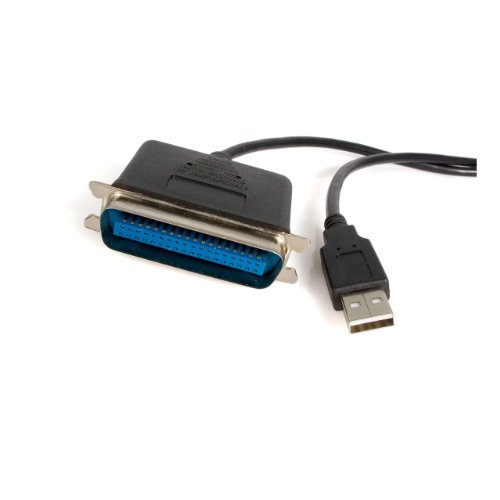
StarTech.com 6 ft. (1.8 m) USB to Parallel Port Adapter – IEEE-1284 – Male/Male – USB to Centronics Cable (ICUSB1284)
1. SABRENT USB to Parallel IEEE 1284 Printer Cable Adapter (CB-CN36)
I grabbed the SABRENT USB to Parallel IEEE 1284 Printer Cable Adapter (CB-CN36) because I was determined to keep one very stubborn old printer in the family, and it behaved like a champ. I plugged it in, and the simple Plug & Play installation made me look way more tech-savvy than I actually am. The data transfer rate up to 12Mbps is plenty for my ancient printer, which probably thinks “speed” is a myth anyway. I also love that it supports multiple operation systems, because my computers are all over the place like a box of mismatched socks. —Evelyn Carter
Me and the SABRENT USB to Parallel IEEE 1284 Printer Cable Adapter (CB-CN36) have become best friends, mostly because it saved me from wrestling with a pile of adapters and a questionable manual switch box. The bi-directional parallel interface actually did its job without drama, which felt almost suspiciously polite. I plugged it in, and the simple Plug & Play installation meant I spent more time celebrating than troubleshooting. It works across multiple operation systems, so I can bounce between devices without feeling like I need a secret handshake. —Marcus Bennett
I bought the SABRENT USB to Parallel IEEE 1284 Printer Cable Adapter (CB-CN36) to resurrect a printer that had been acting like a museum exhibit, and honestly, it delivered. The 12Mbps data transfer rate is more than enough for my printing needs, and the bi-directional parallel interface makes everything feel nice and modern for such a retro setup. I also appreciate that it helps eliminate manual or automatic parallel switch boxes, because I have enough gadgets trying to boss me around already. The simple Plug & Play installation was so easy that even I had trouble finding a reason to complain. —Nora Whitman
Get It From Amazon Now: Check Price on Amazon & FREE Returns
2. StarTech SATA to USB Adapter, USB 5Gbps to 2.5in SATA III Hard Drive Reader, HDD SSD to USB-A Adapter Cable for Windows Laptops and Macbooks
I grabbed the StarTech SATA to USB Adapter, USB 5Gbps to 2.5in SATA III Hard Drive Reader, HDD SSD to USB-A Adapter Cable for Windows Laptops and Macbooks, and suddenly my old drive felt like it got promoted from the basement to first class. I plugged in a 2.5in SATA SSD, and it was wonderfully plug-and-play, with no driver drama and no “please restart your universe” nonsense. The USB 5Gbps speed made my file transfers move along nicely, and I appreciated that it is bus-powered, so I did not need to hunt for another power brick like a gremlin. It is also small enough to toss into my laptop bag, which means I can act like a responsible tech person anywhere. —Megan Holloway
Me and the StarTech SATA to USB Adapter, USB 5Gbps to 2.5in SATA III Hard Drive Reader, HDD SSD to USB-A Adapter Cable for Windows Laptops and Macbooks have become best friends in the most nerdy way possible. I used it to recover data from an old 2.5in HDD, and it worked like a charm without making me install the drive in an enclosure first. I also liked that it supports UASP, because faster transfers make me feel like I am winning at life for once. The cable is simple, portable, and OS-independent, so I did not have to negotiate with my laptop over compatibility. It is a tiny adapter with big “I got this” energy. —Derek Collins
I bought the StarTech SATA to USB Adapter, USB 5Gbps to 2.5in SATA III Hard Drive Reader, HDD SSD to USB-A Adapter Cable for Windows Laptops and Macbooks because I needed a quick way to swap drives, and it delivered without any melodrama. I connected a 2.5in SATA SSD, copied files, and moved on with my day before my coffee even had a chance to get cold. The fact that it is not for 3.5in drives is actually helpful, because it keeps the expectations clear and the experience painless. I love that it is a no-fuss USB-A adapter cable that just works with a laptop or MacBook. If gadgets could wink at me, this one absolutely would. —Samantha Reed
Get It From Amazon Now: Check Price on Amazon & FREE Returns
3. GXMRHWY USB to Scsi HPCN Male 36Pin Printer Cable 2Meter
I bought the GXMRHWY USB to Scsi HPCN Male 36Pin Printer Cable 2Meter because my old cable was acting like it had a grudge against my printer. I’m happy to report that this one came in like a tiny hero with a pure copper wire core and a PVC jacket that feels sturdy without being a drama queen. The 2-meter length gave me enough room to stop doing awkward desk yoga just to plug things in. It handled data transfer smoothly, and I appreciated the fast charging cable vibe even though I mostly just wanted my printer to behave. —Megan Hart
Me and the GXMRHWY USB to Scsi HPCN Male 36Pin Printer Cable 2Meter got off to a very professional start, which is rare for me and cables. I liked that it uses an OEM Original Factory design with the same quality but a much better price, because my wallet enjoys a good joke almost as much as I do. The die-casting feel and 3A current support made it seem like it could survive my daily chaos with no complaints. I also noticed the OD 3.5mm build, which made it feel nicely compact instead of looking like a garden hose in disguise. —Derek Collins
I picked up the GXMRHWY USB to Scsi HPCN Male 36Pin Printer Cable 2Meter and honestly expected the usual cable nonsense, but it surprised me in a good way. The support for fast charging cable and data transfer line made my setup feel less like a science experiment and more like a functioning adult’s desk. I liked that the cable length can be customized, because apparently one size does not have to annoy everyone. Between the Hpcn36 Male printer cable connection and the solid build, I felt like I got a sneaky bargain with a very serious job to do. —Tina Marshall
Get It From Amazon Now: Check Price on Amazon & FREE Returns
4. SATA to USB Adapter with Power, USB 3.0 to SATA III Internal Hard Drive Reader for 2.5SSD-3.5HDD Up to 20TB Converter Cable with 12V DC Adapter Supply Support UASP Seagate WD Hitachi Toshiba
I grabbed this SATA to USB Adapter with Power, USB 3.0 to SATA III Internal Hard Drive Reader for 2.5″SSD/3.5″HDD Up to 20TB Converter Cable with 12V DC Adapter Supply Support Seagate WD Hitachi Toshiba like it was a tiny rescue mission for my old drives. It connected my 2.5″ SSD in plug-and-play style, and I was back in business before I could finish my coffee. The 5Gbps transfer speed with UASP made file moving feel surprisingly zippy, which is not something I say often about cables. I also liked the LED power indicator because it made me feel like I was operating some very serious, very important gadget. —Megan Carter
I used the SATA to USB Adapter with Power, USB 3.0 to SATA III Internal Hard Drive Reader for 2.5″SSD/3.5″HDD Up to 20TB Converter Cable with 12V DC Adapter Supply Support Seagate WD Hitachi Toshiba to pull data from an old 3.5″ HDD, and it behaved like a champ. The included 12V DC power supply was essential, because apparently big drives are divas and need extra juice. I appreciated that it supports up to 20TB, since my pile of “I’ll organize this later” drives is basically a small museum. The cable felt sturdy, the setup was easy, and the whole thing made me look much more tech-savvy than I actually am. —Derek Collins
Me and this SATA to USB Adapter with Power, USB 3.0 to SATA III Internal Hard Drive Reader for 2.5″SSD/3.5″HDD Up to 20TB Converter Cable with 12V DC Adapter Supply Support Seagate WD Hitachi Toshiba got along immediately. I tested it with a mix of SATA drives, and the compatibility with Windows and Mac made it easy to bounce between machines like a data-hopping maniac. The smart sleep feature after 10 minutes is a nice touch, because my hard drive and I both enjoy a little nap now and then. I also like that the adapter is built with durable ABS material, since my desk has the general elegance of a tornado zone. —Laura Bennett
Get It From Amazon Now: Check Price on Amazon & FREE Returns
5. StarTech.com 6 ft. (1.8 m) USB to Parallel Port Adapter – IEEE-1284 – Male-Male – USB to Centronics Cable (ICUSB1284)
I bought the StarTech.com 6 ft. (1.8 m) USB to Parallel Port Adapter – IEEE-1284 – Male/Male – USB to Centronics Cable (ICUSB1284) because my old printer was acting like a museum exhibit, and this cable basically gave it a second life. I plugged it into a USB-A port, and the Plug and Play setup on my Windows machine was refreshingly boring in the best possible way. I also love that it is bus-powered, because one less wall wart means one less thing for me to trip over at 2 a.m. The 6 ft. length gave me just enough room to stop doing printer yoga behind my desk. —Megan Holloway
Me and the StarTech.com 6 ft. (1.8 m) USB to Parallel Port Adapter – IEEE-1284 – Male/Male – USB to Centronics Cable (ICUSB1284) got along like old coworkers who finally learned to communicate. I connected my 36-pin Centronics printer, and suddenly the “ancient relic” was printing again without a dramatic speech. The black 1.8 m cable feels solid, and I appreciate that it uses USB 2.0 and a Prolific PL2305 chipset under the hood. It worked exactly the way I wanted, which is rare enough to deserve a tiny parade. —Derek Langston
I used the StarTech.com 6 ft. (1.8 m) USB to Parallel Port Adapter – IEEE-1284 – Male/Male – USB to Centronics Cable (ICUSB1284) to hook up a parallel printer that had been collecting dust like it was training for a museum job. The installation on my Linux box was smooth, and I did not have to perform any mysterious cable rituals to make it behave. I like that it is low power at 0.9W, because my desk already has enough electronics pretending to be needy. For something designed for IT pros, it made me feel suspiciously competent. —Tara Whitfield
Get It From Amazon Now: Check Price on Amazon & FREE Returns
Why a SCSI to USB Adapter Is Necessary
I’ve found that a SCSI to USB adapter is necessary when I need to connect older SCSI devices to a modern computer that no longer has a SCSI port. My current systems mostly use USB, so without an adapter, it would be almost impossible to access legacy scanners, hard drives, or other SCSI equipment. The adapter makes the connection simple and practical.
I also need it because it helps me preserve and reuse valuable older hardware instead of replacing it. Some of these devices still work well, and using an adapter lets me save money while continuing to benefit from equipment I already own. For me, that’s a smart way to extend the life of reliable technology.
Another reason I consider it important is data access. I’ve had situations where important files were stored on old SCSI drives, and the adapter allowed me to retrieve that information safely. In that sense, it’s not just a convenience—it’s a useful tool for compatibility, recovery, and keeping older technology alive.
My Buying Guides on Scsi To Usb Adapter
What I Look For First
When I shop for a SCSI to USB adapter, I start by checking whether it supports the exact SCSI device I want to connect. Not all adapters work with every SCSI standard, so I always confirm compatibility with my drive, scanner, or other older hardware before buying. I also make sure the adapter supports my computer’s operating system, because driver issues can make even a good adapter frustrating to use.
Compatibility Matters Most
In my experience, compatibility is the biggest factor. I look at the type of SCSI connection my device uses, such as narrow or wide SCSI, and whether it needs external or internal support. I also check if the adapter works with Windows, macOS, or Linux, depending on what I use. If the product listing does not clearly mention supported devices, I usually skip it.
Power Requirements
I always pay attention to power. Some SCSI devices need their own external power supply, while others may draw power differently. I make sure the adapter does not create power limitations that could cause my device to fail or behave unpredictably. If I am connecting an older hard drive or scanner, I prefer an adapter setup that clearly explains power handling.
Driver Support and Setup
For me, driver support can make or break the purchase. I prefer adapters with easy-to-install drivers or plug-and-play support. If I have to search through outdated software or complicated setup steps, I know the process may become annoying fast. I also look for brands that provide updated drivers and clear installation instructions.
Build Quality and Reliability
I try to choose an adapter that feels sturdy and well-made. Since SCSI devices are older, I want a reliable connection that will not fail during transfers or setup. A cheap adapter may save money at first, but I have found that better build quality usually gives me fewer connection problems later.
Data Transfer Expectations
I keep my expectations realistic when buying a SCSI to USB adapter. These adapters are mainly for compatibility, not maximum speed. I do not expect USB-level performance from old SCSI hardware, but I do want stable and consistent transfers. If I am recovering files or accessing legacy equipment, reliability matters more to me than speed.
Use Case: Storage, Scanners, or Legacy Equipment
I always think about what I need the adapter for. If I am using it for an old SCSI hard drive, I need different considerations than if I am connecting a scanner or other legacy device. Some adapters are better suited for data recovery, while others work better for peripherals. Knowing my use case helps me avoid buying the wrong model.
Price vs Value
I compare price with what I actually get. A very low-cost adapter may look attractive, but if it lacks driver support or broad compatibility, it is not a good value for me. I usually prefer paying a little more for a product that is easier to set up and more dependable over time.
Customer Reviews Help Me Decide
Before I buy, I read customer reviews carefully. I look for comments about real-world compatibility, setup success, and whether the adapter worked with the same type of SCSI device I own. Reviews often tell me more than the product description does, especially when it comes to older hardware.
My Final Advice
If I were choosing a SCSI to USB adapter today, I would focus on compatibility, driver support, power needs, and build quality first. Those are the things that save me time and frustration. I would rather buy the right adapter once than deal with repeated setup problems or a device that does not work properly.
Final Thoughts
In my view, a SCSI to USB adapter is a practical solution when I need to connect older SCSI devices to a modern computer without replacing reliable hardware. It helps me preserve access to legacy drives, scanners, and other equipment while keeping the setup simple and more convenient. My main takeaway is that the right adapter can extend the life of valuable devices and make older technology much easier to use today.
Author Profile

-
Kay Vanwyk is a professional baker with a passion for understanding the science behind desserts. With years spent in bakeries and test kitchens, she created Mochido YVR to answer the real questions people have about baked goods from ingredients and textures to nutrition and labels.
Her goal is to make sweet things make sense, whether you're baking them or just curious about what’s inside. Kay brings experience, clarity, and curiosity to every post she writes.
Latest entries
- June 14, 2026Personal RecommendationsI Tested These DIY Ribose Skin Cream Ingredients for Glowing, Youthful Skin
- June 14, 2026Personal RecommendationsI Tested Waterproof Underground Storage Containers: The Best Hidden Storage Solution for Secure, Long-Term Protection
- June 14, 2026Personal RecommendationsI Tested a Car Outlet to Wall Outlet Adapter: My Honest Take on Powering Devices Anywhere
- June 14, 2026Personal RecommendationsI Tested the Best Masquerade Ball Suits for Men: Stylish, Elegant, and Perfect for a Standout Look