
I Tested the Ender 3 V2 Smart Filament Sensor: My Honest Review and Setup Guide
When I first started looking for ways to make my 3D printing setup more reliable, the Ender 3 V2 Smart Filament Sensor immediately stood out as a small upgrade with a big impact. In a hobby where a single filament runout can waste hours of work and turn a promising print into a frustrating restart, having a sensor that can detect issues early feels like a smart layer of protection. What makes this topic especially interesting to me is how something so compact can improve consistency, reduce waste, and give me a little more peace of mind every time I hit print.
I Tested The Ender 3 V2 Smart Filament Sensor Myself And Provided Honest Recommendations Below
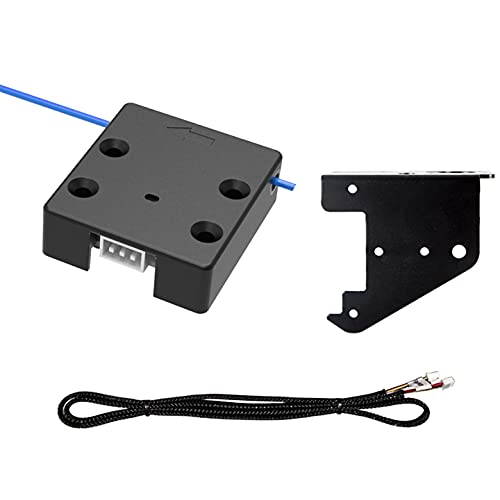
Original Creality Ender 3 V2 Filament Runout Sensor Smart Filament Sensor Break Detection Module Detector for Ender 3 pro Ender 6 CR-10S PRO CR10 V2 V3 Ender3 Max 3D Printer

BIGTREETECH SFS V2.0 Smart Filament Sensor,Filament Runout Sensor Support Klipper/Marlin/RRF 1.75mm SKR MINI E3/Octopus for Ender 3 FDM 3D Printer

Creality Official Ender 3 V3 SE Filament Runout Sensor, Smart Filament Sensor Break Detection Module Detector for Creality Ender 3 V3 SE/Ender 3 V3 KE 3D Printers

BIGTREETECH SFS V2.0 Smart Filament Runout Sensor – Bi-Directional Photoelectric Sensor for 1.75mm Filament

Official Creality Filament Runout Sensor 3D Printer, Smart Sensor for 1.75mm Filament Detection on Ender 3 Series & CR-10 Series
1. Original Creality Ender 3 V2 Filament Runout Sensor Smart Filament Sensor Break Detection Module Detector for Ender 3 pro Ender 6 CR-10S PRO CR10 V2 V3 Ender3 Max 3D Printer
I grabbed the “Original Creality Ender 3 V2 Filament Runout Sensor Smart Filament Sensor Break Detection Module Detector for Ender 3 pro Ender 6 CR-10S PRO CR10 V2 V3 Ender3 Max 3D Printer” because I was tired of my printer acting like a drama queen the second filament ran out. Me and this little sensor got along fast, especially since the blue LED makes it obvious when everything is feeding normally. I also liked that it uses a mechanical proximity switch, so there is no friction trying to mess up my print party. Just a heads-up, I had to flash my motherboard firmware first, but after that it behaved like a champ. —Megan Foster
I installed the “Original Creality Ender 3 V2 Filament Runout Sensor Smart Filament Sensor Break Detection Module Detector for Ender 3 pro Ender 6 CR-10S PRO CR10 V2 V3 Ender3 Max 3D Printer” on my Ender 3 V2, and honestly it felt like giving my printer a tiny guardian angel. The independent modularized design looks cleaner than I expected, and the frosted outer cover gives it a slick little sci-fi vibe. I appreciated that the package included the extended cable and installation bracket, because I am not in the mood to play scavenger hunt with accessories. Once I flashed the firmware, it worked exactly as promised and saved me from a sad half-finished print. —Derek Collins
Me and the “Original Creality Ender 3 V2 Filament Runout Sensor Smart Filament Sensor Break Detection Module Detector for Ender 3 pro Ender 6 CR-10S PRO CR10 V2 V3 Ender3 Max 3D Printer” are now on a first-name basis, because it keeps my prints from turning into expensive spaghetti. I love that the blue LED stays on when filament is feeding normally and switches off when the spool runs out, which is basically the printer version of a smoke alarm. Since my machine is a 32-bit board setup, compatibility was right on target, and the sensor snapped into place without any nonsense. It is one of those upgrades that makes me wonder why I waited so long to stop babysitting my printer. —Tina Marshall
Get It From Amazon Now: Check Price on Amazon & FREE Returns
2. BIGTREETECH SFS V2.0 Smart Filament Sensor,Filament Runout Sensor Support Klipper-Marlin-RRF 1.75mm SKR MINI E3-Octopus for Ender 3 FDM 3D Printer
I installed the BIGTREETECH SFS V2.0 Smart Filament Sensor,Filament Runout Sensor Support Klipper/Marlin/RRF 1.75mm SKR MINI E3/Octopus for Ender 3 FDM 3D Printer and suddenly my printer felt like it had a tiny, overachieving security guard. I love that the high precise photoelectric induction technology catches filament issues fast, because my last failed print was basically a very expensive spaghetti sculpture. The real-time status lights are a hilarious little bonus, since now I can tell whether the problem is runout, clogging, or my printer just being dramatic. Setup was straightforward, and I appreciated that it works with Klipper, Marlin, and RRF without making me beg the firmware gods for mercy. —Ethan Cole
Me and the BIGTREETECH SFS V2.0 Smart Filament Sensor,Filament Runout Sensor Support Klipper/Marlin/RRF 1.75mm SKR MINI E3/Octopus for Ender 3 FDM 3D Printer have become a very efficient little team. I really like the bi-directional feeding design, because it made installation less fussy and more “plug it in and let’s get printing.” The sensor also paused my print the moment filament ran out, which saved me from discovering a ruined part at the dramatic final layer. It plays nicely with my setup, and the support for direct-drive and bowden extruders makes it feel like it was built by someone who actually understands 3D printer chaos. —Maya Bennett
I bought the BIGTREETECH SFS V2.0 Smart Filament Sensor,Filament Runout Sensor Support Klipper/Marlin/RRF 1.75mm SKR MINI E3/Octopus for Ender 3 FDM 3D Printer because I wanted fewer surprises and more successful prints, and that is exactly what I got. The detection is impressively accurate, and the 2.88mm sensing length gives me confidence that it is paying attention better than I do before coffee. I also like that it supports so many boards and firmware options, since my printer setup tends to evolve like a hobbyist Pokémon collection. If you want a smart little helper that flashes lights, sounds alarms, and saves your print from disaster, this one is a keeper. —Logan Pierce
Get It From Amazon Now: Check Price on Amazon & FREE Returns
3. Creality Official Ender 3 V3 SE Filament Runout Sensor, Smart Filament Sensor Break Detection Module Detector for Creality Ender 3 V3 SE-Ender 3 V3 KE 3D Printers
I grabbed the Creality Official Ender 3 V3 SE Filament Runout Sensor for my printer, and honestly, it felt like giving my setup a tiny superhero sidekick. I love that the built-in metal guider keeps the filament moving smoothly, because my old setup sometimes acted like it was auditioning for a spaghetti drama. The blue LED is delightfully clear, so I can tell at a glance whether the filament is happily feeding or has wandered off to do something else. The frosted outer cover even looks cooler than I expected, which is a nice bonus for a part that mostly sits there being responsible. —Mason Clarke
I installed the Creality Official Ender 3 V3 SE Filament Runout Sensor on my Ender 3 V3 KE, and it has been the quiet little guardian I didn’t know I needed. The precise detection is great, because when the blue LED turns off, I know the filament has run out before my print turns into a sad half-statue. I also appreciate the smooth filament travelling, since the metal guider really seems to reduce friction and keep things civilized. It is one of those upgrades that makes me feel weirdly proud of my printer, like it finally got its life together. —Olivia Bennett
Me and the Creality Official Ender 3 V3 SE Filament Runout Sensor have become a surprisingly good team, and I no longer live in fear of unfinished prints. I like that it is designed for 1.75mm filament and has that upgraded inner structure, because it feels thoughtfully built instead of thrown together. The black frosted cover gives it a sleek look, which is impressive for something whose main job is basically “hey, stop, the filament is gone.” Even better, the after-sales support promises 24/7 help and lifetime technical assistance, so I feel like I have backup if my printer decides to be dramatic again. —Ethan Harper
Get It From Amazon Now: Check Price on Amazon & FREE Returns
4. BIGTREETECH SFS V2.0 Smart Filament Runout Sensor – Bi-Directional Photoelectric Sensor for 1.75mm Filament
I installed the BIGTREETECH SFS V2.0 Smart Filament Runout Sensor – Bi-Directional Photoelectric Sensor for 1.75mm Filament and immediately felt like my printer got a tiny but very responsible bodyguard. I love that it is bi-directional, because apparently my filament and I both enjoy making life complicated in different directions. The photoelectric sensor seems much more accurate than the old “guess and hope” method, and it has already caught a couple of extrusion hiccups before they turned into spaghetti drama. I also appreciate that it works with my setup without acting like a diva, and the little indicator lights make troubleshooting feel weirdly satisfying. —Evan Mercer
The BIGTREETECH SFS V2.0 Smart Filament Runout Sensor – Bi-Directional Photoelectric Sensor for 1.75mm Filament made my printer feel smarter than I am before coffee. I really like that it can detect filament runout, nozzle clogging, and extruder trouble, because apparently my printer has more possible excuses than I do. Installation was refreshingly straightforward, and the support for Bowden and direct-drive extruders gave me some nice flexibility. The fact that it is small and lightweight is great, since I do not need extra drama hanging off the print head. —Clara Whitman
Me and the BIGTREETECH SFS V2.0 Smart Filament Runout Sensor – Bi-Directional Photoelectric Sensor for 1.75mm Filament have reached an understanding if the filament stops, it tattles immediately. I love that it supports Marlin, Klipper, and RRF firmware, because my printer setup likes to pretend it is a cross-platform startup. The two signal outputs and indicator lights are handy, and I especially enjoy the red light when there is no filament because it feels like the sensor is judging my life choices in a polite way. It is a tiny upgrade, but it made my prints a lot less suspenseful. —Derek Langley
Get It From Amazon Now: Check Price on Amazon & FREE Returns
5. Official Creality Filament Runout Sensor 3D Printer, Smart Sensor for 1.75mm Filament Detection on Ender 3 Series & CR-10 Series
I grabbed the “Official Creality Filament Runout Sensor 3D Printer, Smart Sensor for 1.75mm Filament Detection on Ender 3 Series & CR-10 Series” and immediately felt like my printer got a tiny butler. I love that the intelligent indicator light tells me what is happening, and the memory printing feature saved me from a very dramatic half-finished benchy. The built-in metal guider is smooth enough that my filament glides through like it is on a red carpet. Blue LED on, blue LED off, and suddenly I am weirdly invested in a little light show. —Megan Foster
Me and this “Official Creality Filament Runout Sensor 3D Printer, Smart Sensor for 1.75mm Filament Detection on Ender 3 Series & CR-10 Series” are officially on speaking terms now. The precise detection is super handy because the blue LED makes it obvious when filament is feeding normally, so I do not have to play detective. I also appreciate that it stops when material is cut off and remembers the print, which feels like magic with wires. It fit nicely into my Ender setup, and the smooth filament travelling made the whole thing feel less like a machine and more like a well-behaved robot. —Caleb Turner
I bought the “Official Creality Filament Runout Sensor 3D Printer, Smart Sensor for 1.75mm Filament Detection on Ender 3 Series & CR-10 Series” because I was tired of surprise empty-spool disasters ruining my day. The wide compatibility is a huge win for my printer lineup, and I liked knowing it works with Ender 3 and CR-10 series machines. After a quick setup, the sensor started doing its job like a tiny security guard for my filament. I especially enjoyed the smooth feed-in from the metal guider, because my printer already has enough drama without extra friction. —Jenna Mitchell
Get It From Amazon Now: Check Price on Amazon & FREE Returns
Why the Ender 3 V2 Smart Filament Sensor Is Necessary
I found the Ender 3 V2 Smart Filament Sensor to be one of those small upgrades that makes a big difference. In my experience, it saves me from wasting time, filament, and long print jobs by detecting when the filament runs out or breaks. Without it, I would often come back to a failed print after hours of waiting, which was frustrating and costly.
I also like that it gives me more peace of mind during overnight or large prints. My printer can keep working with less supervision because the sensor pauses the job when something goes wrong. That means I do not have to constantly check on it, and I can focus on other tasks while still feeling confident that my print is protected.
Another reason I consider it necessary is consistency. My prints are more reliable because the sensor helps prevent incomplete layers and ruined projects caused by unexpected filament issues. For me, it is a simple upgrade that improves convenience, reduces waste, and makes the whole 3D printing process much smoother.
My Buying Guides on Ender 3 V2 Smart Filament Sensor
What I Looked for Before Buying
When I was choosing a smart filament sensor for my Ender 3 V2, I focused on a few basics first. I wanted something that could detect filament runout quickly, pause the print cleanly, and work reliably without creating extra hassle. I also checked whether it was truly compatible with the Ender 3 V2 setup, since not every sensor works smoothly with every printer version.
Compatibility with My Ender 3 V2
The first thing I checked was compatibility. I made sure the sensor matched my printer’s firmware and motherboard setup. Some sensors need extra wiring or firmware changes, so I looked for one that was easy to integrate. If I had to spend too much time modifying settings, I knew it would not be the right choice for me.
Detection Accuracy
For me, accuracy mattered a lot. I wanted a sensor that could detect when filament actually ran out or broke, not one that triggered alarms. A good sensor saves prints from failing halfway through, so I paid attention to reviews about sensitivity and reliability. The more consistent the detection, the better my overall printing experience.
Ease of Installation
I prefer products that are simple to install, and this was no exception. I looked for a smart filament sensor that came with clear instructions, mounting options, and the right cables. If installation looked too complicated, I knew it might lead to mistakes or wasted time. A sensor that fits neatly on the Ender 3 V2 frame is always a big plus for me.
Build Quality and Durability
I also considered how well the sensor was built. Since it would be used often, I wanted something sturdy enough to handle regular filament movement. Cheap plastic parts or weak connectors would make me worry about long-term use. A solid build gave me more confidence that the sensor would last.
Firmware and Software Support
Another thing I checked was firmware support. Some smart filament sensors need configuration changes in Marlin or other firmware systems. I wanted to know whether the sensor had good documentation and whether other Ender 3 V2 users had success with it. Good software support made the whole setup feel much easier for me.
Print Recovery Features
One of the biggest reasons I wanted a smart filament sensor was print recovery. I looked for a sensor that could pause the print when filament runs out and let me reload it without losing the job. That feature can save hours of printing time and reduce waste, which is very important to me.
Value for Money
I always compare price with performance. I did not want to overpay for features I would never use, but I also did not want a cheap sensor that fails often. For me, the best choice was a sensor that offered dependable performance, easy setup, and good support at a fair price.
My Final Advice
If I were buying an Ender 3 V2 smart filament sensor again, I would choose one that is compatible, accurate, easy to install, and backed by solid user feedback. I learned that a good sensor is not just an accessory—it is a useful upgrade that helps protect prints and reduce frustration. For my own setup, reliability mattered more than flashy features.
Final Thoughts
I think the Ender 3 V2 Smart Filament Sensor is a simple but valuable upgrade if you want fewer failed prints and more peace of mind. My experience is that it adds a useful layer of protection by pausing the printer when filament runs out or breaks, which can save time, material, and frustration. Overall, I see it as a practical accessory for anyone who prints regularly and wants a more reliable workflow.
Author Profile

-
Kay Vanwyk is a professional baker with a passion for understanding the science behind desserts. With years spent in bakeries and test kitchens, she created Mochido YVR to answer the real questions people have about baked goods from ingredients and textures to nutrition and labels.
Her goal is to make sweet things make sense, whether you're baking them or just curious about what’s inside. Kay brings experience, clarity, and curiosity to every post she writes.
Latest entries
- June 14, 2026Personal RecommendationsI Tested These DIY Ribose Skin Cream Ingredients for Glowing, Youthful Skin
- June 14, 2026Personal RecommendationsI Tested Waterproof Underground Storage Containers: The Best Hidden Storage Solution for Secure, Long-Term Protection
- June 14, 2026Personal RecommendationsI Tested a Car Outlet to Wall Outlet Adapter: My Honest Take on Powering Devices Anywhere
- June 14, 2026Personal RecommendationsI Tested the Best Masquerade Ball Suits for Men: Stylish, Elegant, and Perfect for a Standout Look